

Projekt Domu Jednorodzinnego Parterowego: Your Ultimate Guide to Single-Storey Living
Projekt domu jednorodzinnego parterowego is one of the most sought-after architectural solutions for families across Poland and the UK who want comfortable, accessible living on a single level. Whether you are planning your first build or downsizing from a larger property, a projekt domu jednorodzinnego parterowego offers remarkable flexibility in layout, energy efficiency, and long-term value. Single-storey homes eliminate the need for staircases, making them ideal for families with young children, elderly residents, or anyone who values ease of movement throughout their living space. The popularity of these designs has surged in recent years, with architects reporting a 35% increase in requests for bungalow-style projects between 2023 and 2025. In this comprehensive guide, we will walk you through every critical aspect of planning, designing, and building your perfect single-storey family home, from initial permits to the finishing touches that make a house truly yours.
Understanding Projekty Domów Parterowych and Their Growing Appeal
The concept behind projekty domów parterowych revolves around maximising living space on a single floor while maintaining architectural beauty and structural integrity. Unlike multi-storey buildings, a dom parterowy spreads horizontally, which means you need a larger plot but gain significant advantages in accessibility and construction simplicity. Average plot requirements for a comfortable three-bedroom single-storey home range from 800 to 1,200 square metres, depending on local zoning regulations and garden space preferences.
Modern architects have transformed the traditional bungalow into something far more sophisticated. A nowoczesny dom parterowy today often features open-plan living areas, floor-to-ceiling windows, and flat or gently sloping rooflines that create a striking contemporary aesthetic. Construction costs in the UK for a well-specified single-storey home typically fall between £1,800 and £2,400 per square metre, though premium finishes and complex foundations on challenging terrain can push this higher. In Poland, equivalent builds range from 3,500 to 5,500 PLN per square metre for turnkey completion.
One of the strongest arguments for choosing a projekt domu parterowego is the reduced structural complexity. Without upper floors, the load-bearing requirements are simpler, foundations can be lighter in many soil conditions, and the overall build timeline shrinks by approximately 15-20% compared to a two-storey equivalent. This translates directly into lower labour costs and fewer potential complications during construction, making single-storey homes particularly attractive for self-builders managing tight budgets.
Key Advantages of Single-Storey Construction
Beyond the obvious accessibility benefits, single-storey homes offer superior energy performance when designed correctly. Heat distribution is more uniform without the chimney effect that draws warm air upward in multi-storey buildings. A well-insulated dom parterowy with triple-glazed windows and mechanical ventilation with heat recovery can achieve energy consumption as low as 40-60 kWh per square metre annually. Installing panele fotowoltaiczne (cena ranging from £5,000 to £9,000 for a typical 4kW residential system in the UK) can further reduce running costs to near zero for electricity, making the long-term ownership economics extremely compelling.
Navigating Pozwolenie na Budowę and Planning Permission
Before any construction can begin, securing the correct permissions is absolutely essential. In Poland, the process starts with obtaining pozwolenie na budowę, which requires a complete set of architectural drawings, structural calculations, and proof that the proposed building complies with local spatial development plans. The application typically takes 65 working days for the authority to process, though simpler projects on plots with existing warunki zabudowy can sometimes be resolved faster.
If your chosen plot does not have a local spatial development plan in place, you will need to submit a wniosek o warunki zabudowy to your local gmina office. This document establishes what type and scale of building is permitted on the specific plot. The wniosek o warunki zabudowy wzór (template) is available from most municipal offices and their websites, and it must be accompanied by a site plan at 1:500 or 1:1000 scale, along with details of intended utility connections for water, sewerage, electricity, and gas where applicable.
In the UK, planning permission for single-storey homes follows the standard full planning application route through your local council. The fee for a single dwelling application in England is currently £578. Permitted development rights may apply for certain extensions or modifications to existing single-storey properties, but new builds almost always require formal consent. Pre-application advice, costing between £150 and £600 depending on the council, is strongly recommended as it can highlight potential issues before you invest in full architectural drawings.
Common Planning Pitfalls to Avoid
Many first-time builders underestimate the importance of early engagement with planning authorities. Submitting a warunki zabudowy wniosek with incomplete documentation is one of the most frequent causes of delay, adding 30 to 90 days to the overall timeline. Ensure your application includes accurate boundary surveys, tree surveys where mature specimens exist on or near the plot, and flood risk assessments for properties in Environment Agency flood zones 2 or 3. Working with a qualified planning consultant who charges between £500 and £1,500 for a full application management service can save considerable time and frustration.
Designing Your Projekt Domu Parterowego z Garażem
Integrating a garage into your single-storey design is one of the most popular configuration choices, and a well-executed projekt domu parterowego z garażem adds both practicality and property value. The garage can be attached directly to the main living space, connected via a breezeway, or positioned as a semi-detached structure sharing one wall with the house. Each approach has distinct advantages in terms of thermal performance, noise isolation, and aesthetic impact on the street-facing elevation.
An attached single garage typically adds 15-18 square metres to the building footprint and costs between £12,000 and £18,000 to construct as part of a new build in the UK. Double garages require 28-36 square metres and cost proportionally more, typically £20,000 to £30,000. Many homeowners now design their garages with future conversion potential in mind, specifying full-height ceilings of 2.7 metres or more, insulated walls, and electrical capacity for workshop or home office use. This forward-thinking approach adds roughly 8-12% to initial garage construction costs but can yield significant returns if the space is eventually converted.
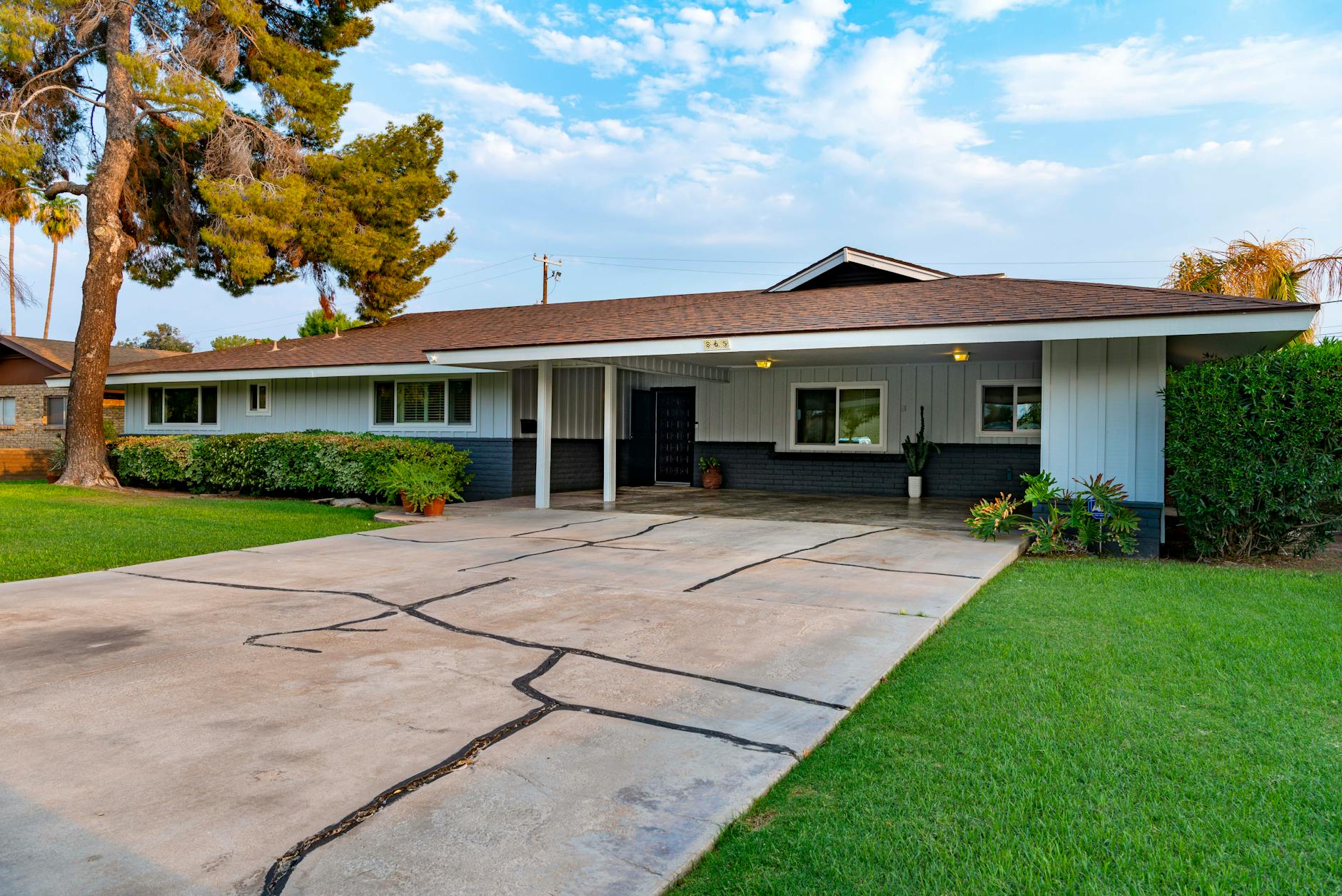
The positioning of the garage relative to the main living spaces deserves careful thought during the design phase. Placing the garage on the north or northeast side of the property shields the main living areas from cold winds while keeping the warmer south-facing aspect available for bedrooms, living rooms, and garden-facing kitchen-diners. This orientation strategy can reduce heating demand by 5-10% compared to a poorly oriented layout, which compounds into meaningful savings over the 50-plus year lifespan of a well-built home.
| Feature | Attached Garage | Detached Garage | Integrated Garage |
|---|---|---|---|
| Typical Cost (UK) | £12,000 – £18,000 | £15,000 – £25,000 | £8,000 – £14,000 |
| Thermal Impact | Moderate buffer zone | No impact on house | Requires extra insulation |
| Noise Isolation | Good with party wall | Excellent | Requires acoustic treatment |
| Conversion Potential | High | Very High | Moderate |
| Plot Space Required | Medium | Large | Minimal additional |
Wycena Nieruchomości and Maximising Property Value
Understanding how wycena nieruchomości (property valuation) works is critical for anyone investing in a new single-storey build. Professional valuers assess properties based on comparable sales data, location quality, build specification, energy performance ratings, and overall condition. For a newly built single-storey home, the EPC rating plays an increasingly important role, with A-rated properties commanding premiums of 10-15% over equivalent D-rated homes in many UK markets. Investing in superior insulation, efficient heating systems, and renewable energy generation pays dividends both in reduced running costs and enhanced resale value.
The specification of windows and rooflights significantly affects both the livability and value of a single-storey home. An okno dachowe Velux is particularly popular in single-storey designs where roof windows can flood interior spaces with natural light without compromising wall space for furniture or storage. The Velux GPU range, with top-hung opening mechanisms, is especially suited to rooms where furniture sits directly below the window. Prices for standard-sized Velux roof windows range from £350 to £800 per unit depending on glazing specification and size, with installation adding £200 to £400 per window. A well-lit interior consistently scores higher in buyer surveys and achieves faster sale times, typically 15-25% quicker than comparable darker properties.
Location remains the single strongest determinant of property value, but within any given area, build quality and specification create significant variation. A projekt domu jednorodzinnego parterowego built to high standards with quality materials will typically achieve a gross development value 20-30% above basic specification equivalents. Key value-adding features include underfloor heating throughout, smart home integration, high-specification kitchen and bathroom fittings, and landscaped gardens with privacy planting. These elements collectively cost 12-18% more than standard alternatives but consistently deliver outsized returns at the point of sale.
Energy Efficiency and Sustainable Building Technologies
Modern single-storey homes are ideally suited to achieving exceptional energy performance ratings. The large roof area relative to floor space creates perfect conditions for solar panel installation, and the absence of upper floors simplifies the installation of whole-house mechanical ventilation systems. Building regulations in both the UK and Poland have tightened considerably in recent years, with the UK’s Future Homes Standard set to require all new homes to produce 75-80% less carbon emissions than current standards from 2025 onward.
The cost of panele fotowoltaiczne (cena for a complete residential system) has dropped dramatically, falling approximately 60% in real terms over the past decade. A typical 4kW system suitable for a three-bedroom single-storey home now costs between £5,000 and £7,000 fully installed in the UK, with payback periods of 8-12 years depending on energy consumption patterns and export tariff rates. Battery storage systems from manufacturers like Tesla Powerwall (approximately £8,500 installed) or GivEnergy (approximately £3,500-£5,500 installed) can further optimise self-consumption rates from 30-40% to 70-85%, significantly accelerating the return on investment.
Ground source and air source heat pumps represent another technology particularly well-suited to single-storey construction. The simpler distribution layout of a bungalow makes underfloor heating installation more straightforward and cost-effective, typically £40-£60 per square metre compared to £50-£75 per square metre in multi-storey properties. Air source heat pumps, costing between £8,000 and £14,000 installed, deliver coefficients of performance of 2.8 to 3.5, meaning every kilowatt of electricity consumed produces nearly three kilowatts of heat. Combined with a well-insulated building envelope and solar panels, these systems can reduce annual heating costs to under £400 for a typical 120-square-metre single-storey home.
Frequently Asked Questions
How Much Does a Projekt Domu Jednorodzinnego Parterowego Cost to Build from Scratch?
The total cost of building a single-storey family home varies significantly based on location, specification level, and site conditions. In the UK, expect to budget between £1,800 and £2,400 per square metre for a good-quality build, meaning a 120-square-metre three-bedroom home would cost approximately £216,000 to £288,000 for construction alone, excluding land purchase. In Poland, equivalent costs range from 3,500 to 5,500 PLN per square metre for a turnkey finish. Additional costs include architectural design fees (typically 5-8% of build cost), structural engineering calculations (£1,500 to £3,000), building control fees, and utility connection charges which can range from £2,000 to £8,000 depending on distance to existing mains services.
Is a Single-Storey Home More Energy Efficient Than a Two-Storey Property?
Single-storey homes can achieve superior energy efficiency when properly designed, though they also present unique challenges. The larger roof-to-floor-area ratio means more potential heat loss through the roof, making high-quality insulation absolutely critical. Specify at least 300mm of mineral wool or 150mm of rigid PIR board in the roof to achieve U-values of 0.13 W/m²K or better. However, the advantages are substantial: uniform heat distribution without stack effect losses, simpler and more effective mechanical ventilation layouts, larger available roof area for solar panel installation, and easier achievement of airtightness targets. Well-designed single-storey homes regularly achieve air permeability results below 3 m³/h/m² at 50 Pa, compared to typical values of 5-7 m³/h/m² for standard two-storey construction.
What Planning Documents Are Needed Before Starting a Single-Storey Build?
The documentation requirements differ between Poland and the UK but share common principles. In Poland, you need either confirmation that your plot falls within a local spatial development plan or an issued decision on warunki zabudowy. Following this, you require a complete architectural project prepared by a licensed architect, structural calculations, energy performance assessment, and formal pozwolenie na budowę from the starostwo. In the UK, you need full planning permission from your local council (application fee £578 for a single dwelling), which requires submission of detailed floor plans, elevations, site plans, a design and access statement, and potentially additional reports covering ecology, trees, drainage, and heritage impact depending on site constraints. Building Regulations approval is a separate requirement covering the technical construction standards and must be obtained before work commences on site.