
Domy z basenem polska: Costs, Permits and Resale Value
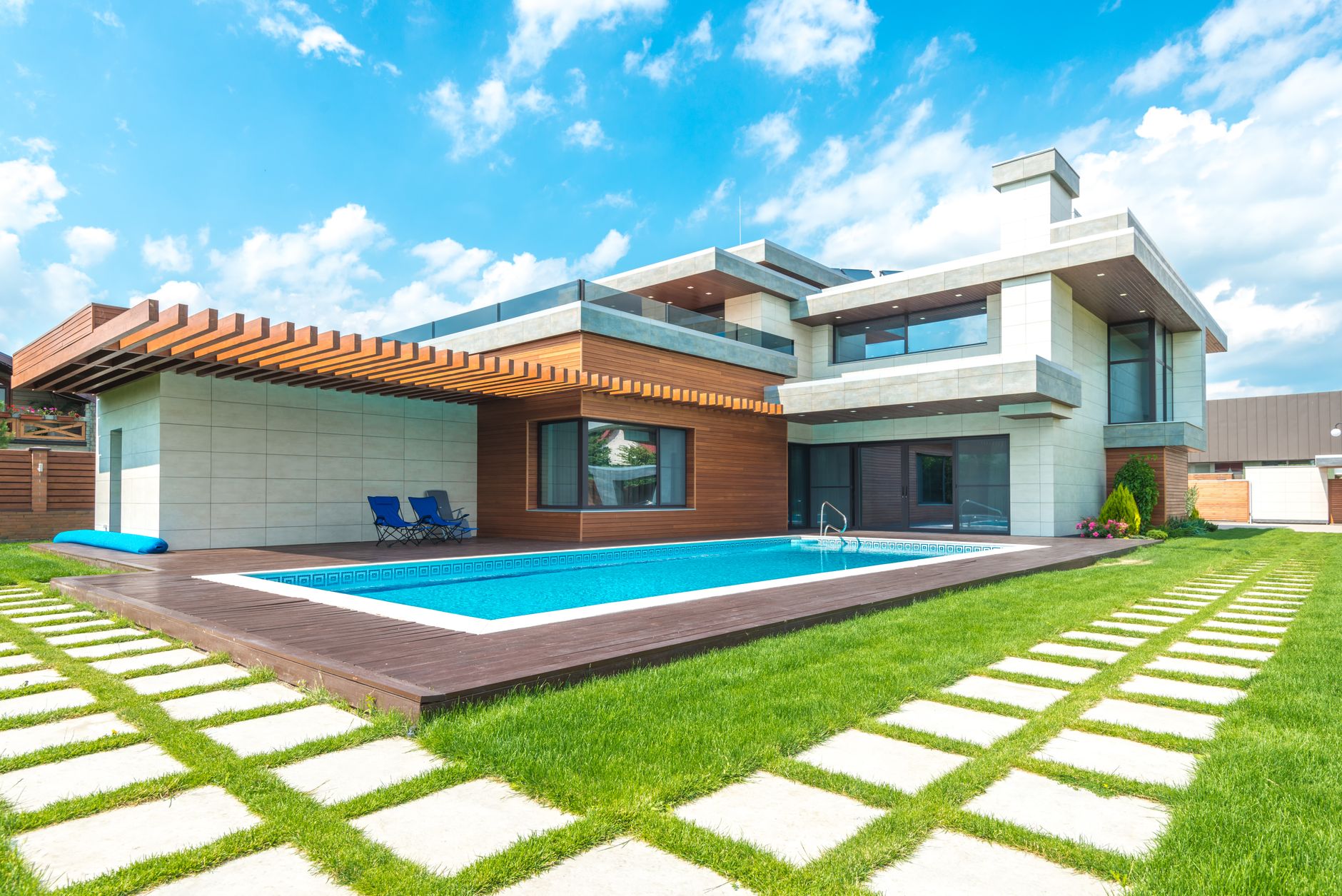
The search term domy z basenem polska covers one of the most sharply defined corners of the Polish property market: detached houses sold with a private swimming pool. Buyers scanning listings for domy z basenem polska are usually comparing two routes — purchasing a finished property with the pool already installed, or buying land and adding a pool during construction. The price gap between those routes is wider than most people expect, and it changes the whole financing conversation. A ready-built pool villa near Warsaw, Kraków or the Tri-City typically carries a premium of £35,000 to £90,000 over an equivalent house without water. Building the same pool yourself, on a plot you already own, often lands between £18,000 and £45,000 depending on shell material, depth and heating. This guide walks through permits, plot rules, construction options, running costs and resale value, with the paperwork and numbers laid out in the order you will actually meet them.
Why Pool Homes Form a Separate Segment of the Polish Market
Poland’s pool-home segment is small but distinct. Fewer than two percent of detached houses listed nationally include an in-ground pool, which concentrates demand among a narrow group of buyers and sellers. That scarcity supports pricing in commuter belts around Warsaw, Poznań and Wrocław, while thinning rapidly in rural voivodeships with weaker rental demand.
Climate shapes the economics. A Polish outdoor pool delivers roughly 100 to 130 comfortable swimming days per year without heating, stretching to 190 with an air-source heat pump and a solar cover. Buyers who assume Mediterranean usage are disappointed; buyers who budget for heating from day one rarely are.
Two buyer profiles dominate listings for domy z basenem polska: Polish families returning from the UK or Ireland with sterling savings, and investors converting properties into short-let holiday rentals near lakes and forests. Each profile values different things — the first wants year-round comfort, the second wants photographs that convert bookings in January.
Permits and Paperwork Before the First Spade
Paperwork order matters more than budget order. If your plot sits outside a local zoning plan, the first document is the wniosek o warunki zabudowy — the application for development conditions that establishes what may be built and how much of the plot can be covered. Municipalities typically issue a decision within two to four months.
A completed warunki zabudowy wniosek must include a site map, utility confirmations and a description of the intended building. Many town halls publish a wniosek o warunki zabudowy wzór on their websites, and using that template cuts rejection rates noticeably. Errors in plot boundaries and access rights cause most delays, not the pool itself.
The house itself needs a pozwolenie na budowe, the building permit issued by the district office once your architect submits a stamped design. Pool permitting is separate and depends on surface area and depth; small garden pools often need only notification, while larger structures with technical rooms fall under the same permit as the dwelling.
Typical Permit Timeline and Fees
Budget around £250 to £600 for architectural adaptation, £120 to £300 for surveyor maps and £40 to £90 in administrative fees. Legal deadlines run 65 days for a standard permit decision, though incomplete files reset the clock. Overseas buyers should add four to six weeks for certified translations and notarised powers of attorney.
Single-Storey Layouts That Suit a Pool
Single-storey living pairs naturally with a pool, which is why projekty domów parterowych dominate catalogues aimed at this market. A well-planned projekt domu parterowego puts the living area, terrace and water on one axis, removing stairs between the towel rail and the shallow end and simplifying supervision of small children.
A compact dom parterowy of 120 to 150 square metres is the practical sweet spot. A nowoczesny dom parterowy with a flat or low-pitched roof gains daylight from a rooflight such as an okno dachowe velux above the hallway, which keeps the plan open without adding glazing to the pool elevation.
Storage decides whether a pool house works in practice. A projekt domu parterowego z garażem gives you somewhere for the filtration unit, robot cleaner, winter cover and chemicals, all of which need frost-free space. Retrofitting a plant room later costs three to four times what including it at design stage would have.
Orientation, Shading and Privacy
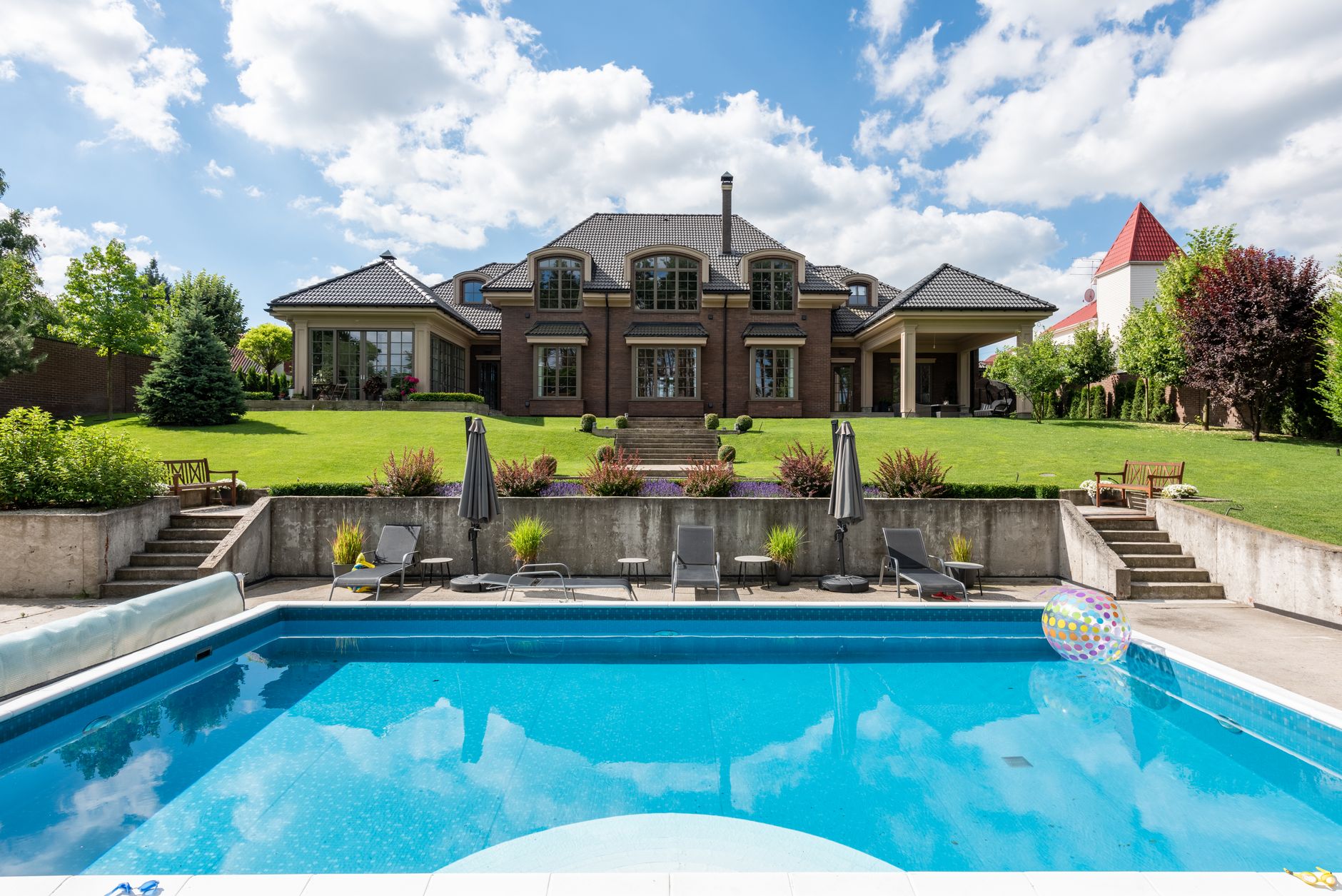
Face the pool south or south-west and keep at least four metres between the water and the terrace doors so splash never reaches the threshold. Evergreen hedging on the windward side cuts evaporation measurably. Neighbour sightlines matter too: on narrow plots, an L-shaped layout screens the water better than fencing ever will.
- Minimum plot width of 20 metres for an 8 × 4 metre pool with a usable surround
- Technical room of 4 to 6 square metres, insulated and frost-free, adjacent to the shell
- Non-slip stone or porcelain coping rated R11 or better around the full perimeter
- Dedicated 400 V circuit for the heat pump, sized at installation rather than upgraded later
- Rainwater tank for top-ups, since evaporation reaches roughly 1,000 litres a week in high summer
Build Costs, Shell Types and Annual Running Costs
Shell type drives the headline figure. Reinforced concrete pools cost most and last longest; polyester shells arrive in one piece and cut installation to a fortnight; steel-wall liner pools sit between. Listings for domy z basenem polska rarely state which type is installed, so ask for the technical documentation before making an offer.
| Pool type | Installed cost (8 × 4 m) | Life before major refurbishment | Annual maintenance |
|---|---|---|---|
| Polyester shell | £16,000 – £24,000 | 20 – 25 years | £600 – £900 |
| Steel-wall with liner | £12,000 – £18,000 | 10 – 12 years (liner) | £550 – £800 |
| Reinforced concrete, tiled | £30,000 – £48,000 | 30+ years | £800 – £1,200 |
| Indoor concrete with dehumidification | £55,000 – £85,000 | 30+ years | £1,800 – £2,600 |
Running costs hinge on heating. A 12 kW air-source pool heat pump draws roughly 3 kW electrically and can add £400 to £700 a year. Owners increasingly offset this with roof generation, and the panele fotowoltaiczne cena for a 6 kWp array typically falls between £4,500 and £7,000 fully installed.
Chemistry, water and insurance form the smaller tail. Expect £120 to £200 a year on chlorine or salt-electrolysis consumables, £60 to £110 on mains top-ups, and a £40 to £90 uplift on buildings cover. Winterising properly — lowering the level, blowing lines, fitting a rigid cover — prevents the frost damage that dwarfs all of it.
Valuation, Resale and Documentation
Valuers treat pools cautiously. A formal wycena nieruchomosci in Poland credits an in-ground pool at roughly 40 to 60 percent of its build cost, not the full amount, because the buyer pool narrows. Indoor pools recover a higher share in premium suburbs; above-ground pools are usually treated as chattels with no valuation effect.
Location amplifies or erases that premium. Within 30 minutes of a major city, well-maintained domy z basenem polska sell in normal timeframes and attract competing offers. Two hours from the nearest airport, the same specification can sit on the market for a year while buyers mentally subtract the running costs from their offer.
Documentation protects value. Keep the as-built drawings, pump and heat-pump warranties, water treatment logs and any permit correspondence in one folder. Sellers who hand over a complete file routinely close £5,000 to £12,000 above those who cannot prove the pool was built legally and serviced on schedule.
How Much Does a Private Pool Add to Annual Running Costs in Poland?
Budget between £900 and £2,200 a year for a typical 8 × 4 metre outdoor pool. Heating dominates: an air-source heat pump running from May to September costs £400 to £700 in electricity, while circulation pumps add £150 to £280 depending on whether the unit is variable-speed. Chemicals and test kits account for £120 to £200, water top-ups £60 to £110, and annual servicing of the filtration system another £150 to £250. A solar cover cuts evaporation losses by around 60 percent and pays for itself within two seasons, which is the single cheapest efficiency measure available to owners.
Is a Building Permit Always Required for a Garden Swimming Pool?
No, but the exemption is narrower than sellers often claim. Polish construction law lets you build a garden pool without a full permit when the water surface stays under a defined threshold — commonly 50 square metres — and the pool serves a single-family dwelling on your own plot. Beyond that area, or where a technical building, roof enclosure or significant excavation is involved, you need the standard permit route with a stamped design. Local zoning decisions can impose stricter limits on built coverage regardless of national rules, so always read the development conditions for your specific plot before ordering materials or booking a contractor.
What Should a UK-Based Buyer Check Before Purchasing a Pool Property?
Start with the land and mortgage register entry, confirming that the pool appears on the property survey and that no unregistered extension breaches the plot coverage limit. Request the original permit or notification file, the pool technical passport, and electrical inspection certificates for the plant room. Commission an independent survey that includes a pressure test of the circulation lines, because leaks under a terrace are expensive and invisible. Check the heating source and its age; heat pumps older than ten years often need replacement within a season. Finally, confirm whether the seller is VAT-registered, since that changes the transaction tax treatment considerably.