
A kredyt hipoteczny dla cudzoziemca is the financing route most international buyers take when they want to own property rather than rent it long term. Applying for a kredyt hipoteczny dla cudzoziemca is not harder than a standard mortgage, but it is different: lenders ask for a longer residency trail, a larger deposit, and clearer proof that income earned abroad will keep arriving. Underwriters look at three things — how long you have lived and worked in the country, whether your contract is permanent, and how much of your salary is already committed to other debt. Get those three straight and the rest is paperwork. This guide walks through eligibility, deposits in GBP, the permits you need if you plan to build instead of buy, and the design choices that protect resale value a decade from now.
Who Actually Qualifies for a Kredyt Hipoteczny dla Cudzoziemca
Citizenship sets the starting position. EU and EEA applicants are usually assessed on almost the same scorecard as domestic borrowers, while applicants from outside the bloc need a valid residence card and, in most cases, a permit tied to employment. Banks want that permit to run at least twelve months beyond the application date.
Employment stability matters more than raw salary. A permanent contract held for six months at £2,800 net per month will often beat a freelance income of £4,200 with nine months of history. Where the applicant is self-employed, lenders typically request twenty-four months of filed accounts and a stable or rising revenue line across both years.
Credit history follows you less easily than you would hope. A thin domestic file forces the bank to lean on foreign reports, employer references and twelve months of bank statements. Applicants who open a local current account eighteen months before applying and route their salary through it consistently see faster, cleaner decisions.
Residency Status and Contract Type
Two applicants with identical earnings can receive very different offers purely on paperwork. A three-year residence permit plus an indefinite employment contract unlocks the standard product range. A one-year permit with a fixed-term contract usually pushes the case toward a shorter term, a higher margin, or a request for a domestic co-borrower.
Deposit, Rates and the Real Cost in GBP
Deposit expectations are the single biggest difference between resident and non-resident applications. Residents frequently complete on 10 to 20 percent down. Foreign applicants are commonly quoted 20 to 40 percent, with the higher end reserved for short residency histories, income paid in a currency other than the loan currency, or unusual property types.
Margins reflect that same risk assessment. Expect roughly 0.2 to 0.6 percentage points above the standard offer, plus an arrangement fee that can reach 2 percent of the advance. On a £180,000 loan that fee alone is £3,600, so negotiating it down — often possible in exchange for buying the lender’s insurance product — is real money.
Budget for the closing extras before you commit, because they land within weeks of each other and rarely appear in the headline calculation:
| Cost item | Typical range (GBP) | Notes |
| Deposit on a £225,000 home | £45,000 – £90,000 | 20% to 40% depending on profile |
| Bank valuation | £150 – £400 | Ordered by the lender, paid by you |
| Arrangement fee | £0 – £3,600 | 0% to 2% of the advance |
| Notary and land registry | £900 – £2,200 | Scales with purchase price |
| Sworn translations | £25 – £40 per page | Contracts, payslips, tax returns |
Permits and Paperwork If You Plan to Build Rather Than Buy
Financing a self-build changes the sequence completely. Before an architect finalises anything, a plot outside a local zoning plan requires a wniosek o warunki zabudowy — the application that establishes what may legally be built there. Height, roof pitch, footprint ratio and setback are all fixed at this stage, not later.
Preparing a warunki zabudowy wniosek is administrative rather than creative, and mistakes cost months. Most municipal offices publish a wniosek o warunki zabudowy wzór that lists every required annex: a site map, utility declarations from the water and power providers, and a description of the intended use. Submit an incomplete file and the clock restarts.
Only once that decision is final does the pozwolenie na budowe application make sense, and no lender will release construction tranches without it. Approval commonly takes two to four months. Banks then pay out in three or four stages against a surveyor’s sign-off, so your build schedule and your drawdown schedule must be written together.
What Lenders Check in a Self-Build File
Underwriters want a fixed-price contractor agreement, a cost schedule broken down by stage, and a contingency of at least 10 percent. They will also confirm the plot has legal road access and a utility connection agreement, since a plot without either is worth far less than the price the seller quoted you.
Choosing a House Design That Holds Its Value
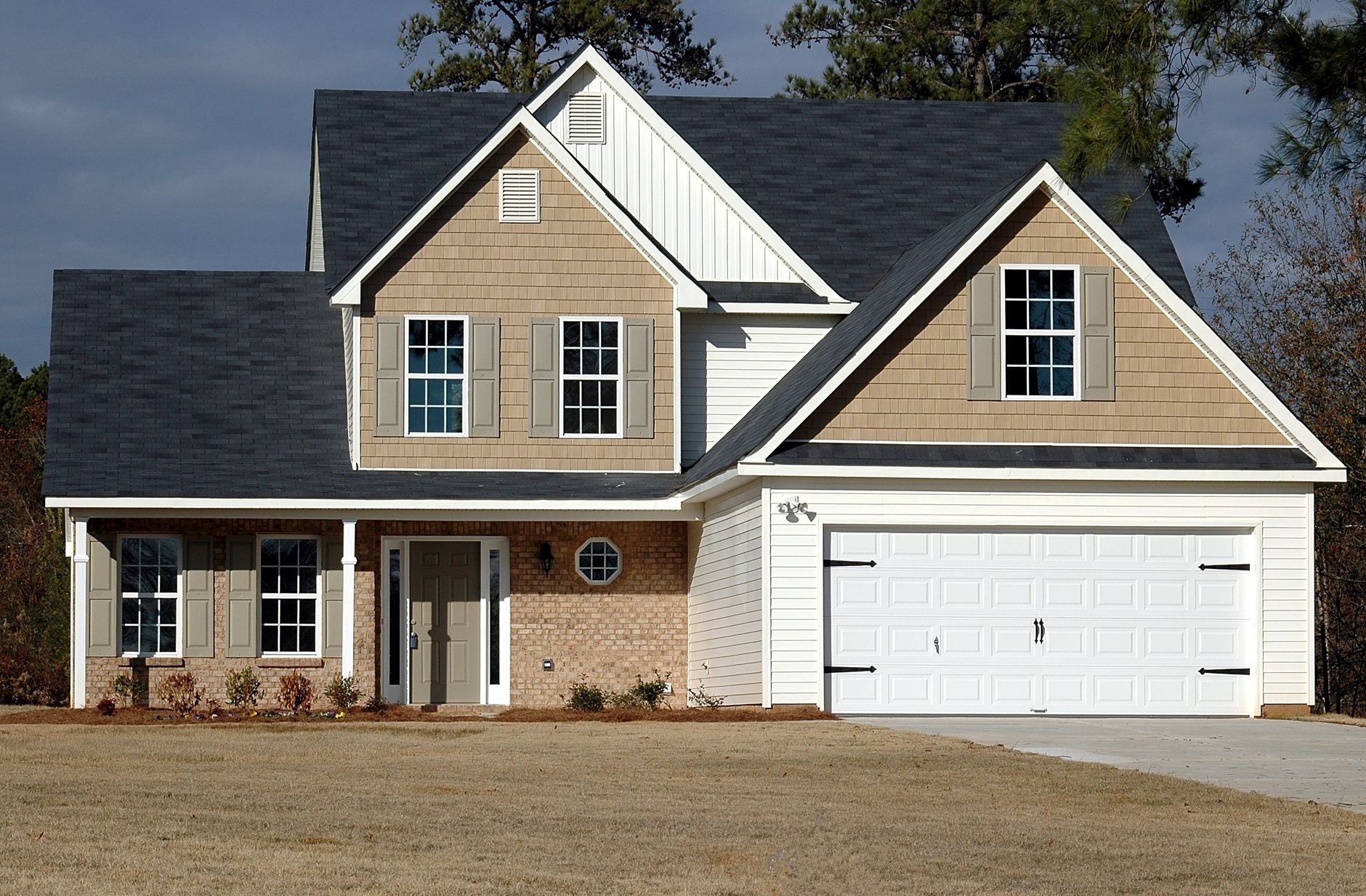
Design choice affects both the loan decision and resale. Single-storey layouts dominate the self-build market because they suit ageing owners, reduce structural complexity, and avoid stair-related accessibility problems. Catalogues of projekty domów parterowych now run to thousands of variants, from 90 square metre starters to 200 square metre family layouts.
A well-chosen projekt domu parterowego costs between £400 and £1,400 as a ready-made catalogue purchase, against £4,000 or more for a bespoke commission. Adapting a catalogue design to your plot adds roughly £600 to £1,200 in architect fees, which remains far cheaper than starting from a blank sheet.
When comparing options, weigh the features that genuinely move valuations rather than the ones that photograph well:
- A compact rectangular footprint, which cuts wall area and heating losses
- A projekt domu parterowego z garażem, since an integral garage adds usable dry storage buyers pay for
- Ceiling height of at least 2.7 metres in living areas
- South-facing glazing balanced with summer shading
- A utility room separating laundry from the kitchen
Modern Versus Traditional Elevations
A nowoczesny dom parterowy with a flat or low-pitch roof and large glazed panels sells quickly in city-adjacent locations but can sit unsold in rural markets that expect gable roofs. Match the elevation to local buying habits, because a dom parterowy that looks out of place typically takes several months longer to sell.
Valuation, Energy Upgrades and the Ten-Year View
Every kredyt hipoteczny dla cudzoziemca is secured against a surveyor’s figure, not the price on the listing. A professional wycena nieruchomosci compares recent local transactions, plot size, condition and technical standard. If it lands below the agreed price, the bank lends against the lower number and you cover the gap in cash.
Energy specification now feeds directly into that figure. Roof glazing is a straightforward upgrade: an okno dachowe velux in a triple-glazed specification runs roughly £430 to £780 per unit before flashing and fitting, and converting dead attic space into a usable study measurably raises the assessed value of a single-storey home.
Generation capacity matters too. Anyone researching panele fotowoltaiczne cena will find complete 6 kWp systems between £5,200 and £8,500 installed, typically paying back over eight to eleven years. Surveyors increasingly treat a documented, warranted installation as a value-adding fixture rather than a removable extra, so keep every certificate.
How long does approval usually take from first enquiry to signed contract?
Plan for eight to fourteen weeks end to end, and treat anything faster as a bonus. The first two weeks go on gathering documents: passport, residence permit, employment certificate, twelve months of bank statements and tax returns. Sworn translation of foreign paperwork adds another one to two weeks and costs £25 to £40 per page. Formal credit assessment then takes three to six weeks, during which the bank orders its own valuation and may return with follow-up questions. Notary scheduling and land registry entry consume the final fortnight. The single biggest cause of delay is incomplete submission, so send everything at once rather than drip-feeding documents as they are requested.
Is a larger deposit always the better choice for a foreign applicant?
Usually, but not automatically. Moving from a 20 percent deposit to 30 percent often shaves 0.2 to 0.3 percentage points off the margin, which on a £180,000 loan across twenty-five years saves several thousand pounds in interest. Beyond roughly 35 percent, the pricing improvement flattens while your liquidity disappears. Keep a cash reserve covering at least six months of instalments plus a build or renovation contingency, because banks rarely allow you to redraw the deposit later without a fresh application. If your income arrives in a different currency from the loan, a larger deposit also cushions against exchange rate movement, which is a genuine argument for the higher end.
What documents do lenders request most frequently from international buyers?
The core set is predictable: a valid passport, residence card or permit, an employer certificate stating contract type and start date, three to six recent payslips, and twelve months of bank statements showing salary credits. Self-employed applicants add two years of filed accounts and confirmation of no outstanding tax arrears. Purchase cases require the preliminary sale agreement and land registry extract; build cases require the design documentation, the construction permit, a fixed-price contractor agreement and a staged cost schedule. Anything issued abroad needs sworn translation. Assemble this file before the first meeting and the assessment stage becomes noticeably shorter and considerably less stressful.